Apilimod (STA-5326) Inhibits PIKfyve to Block SARS-CoV-2 Endosomal Viral Entry
Copy code to add this image to your page
The identification of effective host-targeted antiviral therapeutics requires systematically screening functional chemical libraries against physiological target pathways. In response to the emergence of SARS-CoV-2, large-scale drug repositioning initiatives evaluated approximately 12,000 clinical-stage and FDA-approved small molecules to identify potent viral replication inhibitors. Among these candidates, Apilimod (STA-5326) emerged as a high-affinity inhibitor targeting the host lipid kinase phosphatidylinositol-3-phosphate 5-kinase (PIKfyve). Rather than directly targeting viral enzymatic proteins—which are subject to rapid mutational drift and drug resistance—Apilimod selectively disrupts host endosomal trafficking machinery essential for viral host cell entry.
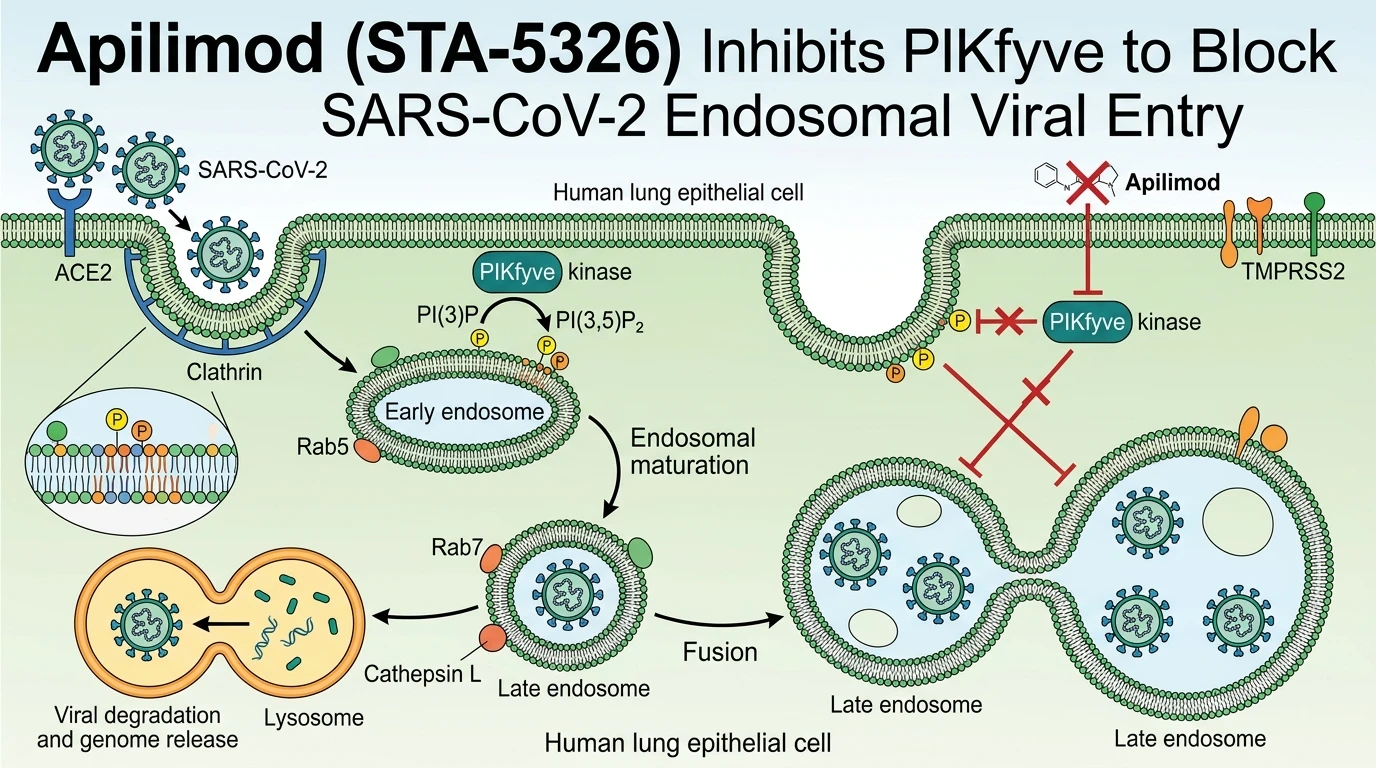
Phosphoinositide lipid signaling governs critical stages of intracellular vesicle dynamics, lysosomal biogenesis, and endosomal sorting. The central host lipid kinase PIKfyve synthesizes phosphatidylinositol 3,5-bisphosphate [PI(3,5)P2] from its precursor phosphatidylinositol 3-phosphate (PI3P). Detailed structural and biochemical characterizations, accessible via the PIKfyve lipid kinase target profile, demonstrate that PIKfyve operates within a heterotrimeric complex comprising the scaffold protein VAC14 and the lipid phosphatase FIG4. SARS-CoV-2 utilizes two distinct pathways for host cell entry: direct fusion at the plasma membrane facilitated by the cell-surface serine protease TMPRSS2, or receptor-mediated endocytosis followed by pH-dependent cathepsin L cleavage in late endolysosomes. In cellular environments where TMPRSS2 expression is minimal or absent, the endosomal uptake route serves as the primary gateway for viral internalization. Small molecule inhibition of PIKfyve by STA-5326 halts endosomal vesicle dynamics and maturation, resulting in endosomal swelling, altered membrane trafficking, and the physical trapping of viral particles within non-productive endolysosomal vesicles. Consequently, viral genomic RNA uncoating into the host cytosol is fully prevented.
High-throughput drug repositioning collections, containing clinical candidates across diverse therapeutic indications, allow rapid translation from bench discovery to clinical deployment. The screening protocol evaluated viral replication through quantitative high-content imaging and viral antigen detection assays. Out of thousands of molecules evaluated, compounds targeting host machinery—specifically PIKfyve inhibitors—demonstrated consistent antiviral activity across distinct viral isolates. The enzymatic activity of PIKfyve is selectively inhibited by Apilimod at low nanomolar concentrations without significant off-target activity against class I or class III phosphoinositide 3-kinases (PI3Ks). This kinase selectivity profile prevents unintended disruption of primary PI3K-AKT-mTOR signaling cascades in non-infected host cells.
In vitro functional screens confirmed high potency across diverse human cellular models. In human embryonic kidney cells ectopically expressing the human ACE2 receptor (293T-ACE2), Apilimod demonstrated nanomolar inhibition of SARS-CoV-2 replication, yielding an half-maximal effective concentration (EC50) of 12 nM. In human hepatoma cells expressing ACE2 (Huh-7-ACE2), the compound maintained robust efficacy with an EC50 of 88 nM. Cytotoxicity assays conducted across identical concentration ranges verified high selectivity margins, as half-maximal cytotoxic concentrations (CC50) exceeded active antiviral doses by several orders of magnitude under tested culture conditions.
To bridge cell-line observations with physiologically representative lung models, researchers interrogated Apilimod in human induced pluripotent stem cell (iPSC)-derived pneumocyte-like cells. Treatment with the small molecule reduced SARS-CoV-2 infection by 85% in these primary-like type II alveolar epithelial cultures. Furthermore, ex vivo evaluations employing primary human lung tissue explants demonstrated marked reductions in both viral RNA transcript levels and infectious viral particle titers following drug administration. Because Apilimod (STA-5326) previously completed Phase I and Phase II clinical trials for autoimmune conditions, including Crohn's disease and rheumatoid arthritis, its human safety profile, oral bioavailability, and pharmacokinetic metrics are well documented. Host-directed target engagement of PIKfyve provides a viable pharmacological framework for modulating entry pathways in viral diseases.
Pharmacological Evaluation and Antiviral Efficacy in Human Models
Copy code to add this image to your page
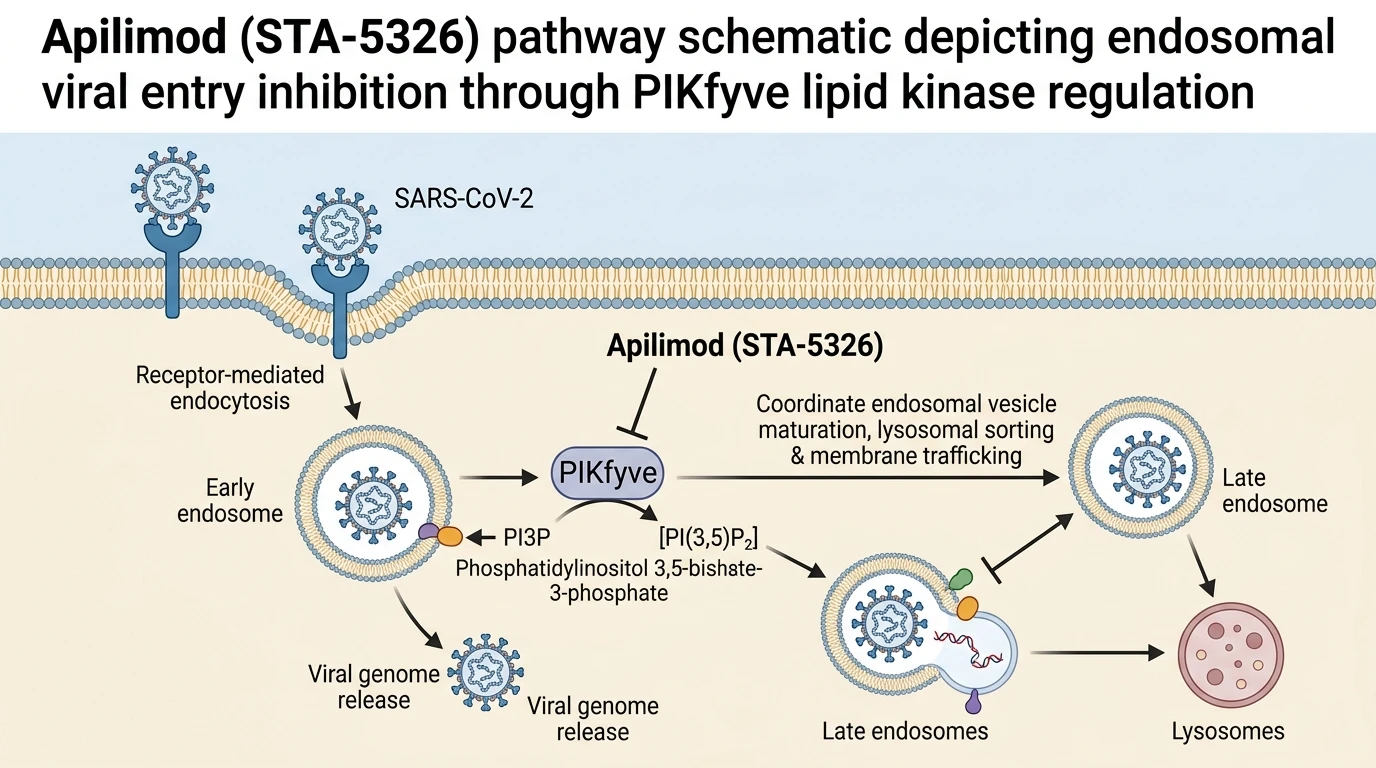
Apilimod (STA-5326) inhibits the host lipid kinase PIKfyve, halting the conversion of PI3P to PI(3,5)P2 required for endosomal maturation. SARS-CoV-2 virions internalized via receptor-mediated endocytosis become entrapped within stalled endosomes, preventing spike protein cleavage and cytoplasmic viral genome release.
Nanomolar Potency in Human ACE2-Expressing Cell Lines
High-throughput drug repositioning collections identified target compounds rapidly. Apilimod (STA-5326) demonstrated potent, dose-dependent inhibition of viral replication across multiple human cell culture systems. In 293T-ACE2 expression assays, the compound yielded an EC50 of 12 nM; parallel evaluations in Huh-7-ACE2 cells confirmed an EC50 of 88 nM. Host-targeted kinase modulation limits viral bypass mechanisms—a key advantage over direct-acting antivirals. Cellular viability remained intact across tested dosage ranges, demonstrating a favorable therapeutic window in vitro.
Suppression of Viral Replication in Primary Lung Models
Primary physiological models validate cellular assay observations. In human iPSC-derived pneumocyte-like cells, STA-5326 treatment suppressed SARS-CoV-2 infection by 85%. Ex vivo human lung tissue explants similarly exhibited marked reductions in viral RNA copy numbers and infectious viral titers following treatment. These ex vivo models preserve architectural complexity and primary cellular stoichiometry—providing clinical relevance prior to human trials. Consequently, lipid kinase inhibition represents a valid host-directed strategy against respiratory viral pathogens.
Inhibition of Endosomal Trafficking and Viral Genome Delivery
Endosomal entry pathways require precise phosphoinositide lipid conversions. By directly inhibiting PIKfyve enzymatic activity, the compound prevents the conversion of phosphatidylinositol 3-phosphate to phosphatidylinositol 3,5-bisphosphate; this catalytic arrest halts late endosome maturation. Viral particles remain entrapped within stalled endosomal compartments; host cytosolic entry fails. These pharmacodynamic effects disrupt early viral life-cycle steps without compromising host cellular survival in short-term assays. Future clinical evaluations must establish optimal dosing regimens in human respiratory tissues.